Bleeding
출혈
Bleeding is an AilmentAilmentsAilments are a family of common Debuffs associated with specific damage types. The list of Ailments is: Bleeding, Ignite, Chill, Freeze, Shock, Electrocute, and Poison. that deals PhysicalPhysical DamagePhysical damage is one of the five Damage Types. It is the most common and the only one reduced by Armour, rather than by a Resistance.
Most physical damage comes from Weapon Attacks, but some Spells and other skills deal physical damage as well. Physical damage over time can be inflicted with Bleeding. damage over time, and lasts 5 seconds by default. Damage from Bleeding bypasses Energy ShieldEnergy ShieldEnergy Shield protects your Life by taking damage instead. Rapidly Recharges if you don't lose Energy Shield for a short time.
Chaos damage removes twice as much Energy Shield.
Damage from Bleeding and Poison bypasses Energy Shield to remove Life directly.
Bleeding deals an extra 100% damage while the target is moving, or if the Bleeding is AggravatedAggravated BleedingBleeding that has been Aggravated always treats the target as moving, which causes it to deal 100% extra damage.
Once a Bleeding Debuff has been Aggravated, it will remain Aggravated until its duration expires.
Each Bleeding Debuff can be Aggravated, or not, independently — one Bleeding Debuff being Aggravated does not mean other Bleeding Debuffs on the target are also Aggravated, and Aggravating some or all of them will have no effect on new Bleeding Debuffs applied afterwards. However, effects which Aggravate Bleeding on a target do so to all Bleeding Debuffs currently on that target unless otherwise specified..
PhysicalPhysical DamagePhysical damage is one of the five Damage Types. It is the most common and the only one reduced by Armour, rather than by a Resistance.
Most physical damage comes from Weapon Attacks, but some Spells and other skills deal physical damage as well. Physical damage over time can be inflicted with Bleeding. damage from HitsHit DamageAny damage that isn't damage over time is Hit damage.
Damaging Ailments which result from a Hit will calculate their damage from that Hit, and will not subsequently have Damage modifiers applied directly to them. As a result of this, raising Hit Damage will result in more powerful Damaging Ailments innately. ContributesDamage Contributing to AilmentsBy default, specific Ailments are calculated based on only specific damage types, such as only the Fire damage of a Hit mattering when inflicting Ignite.
Allowing another damage type to contribute to an Ailment means that all damage of the relevant types is summed when performing calculations for that Ailment.
For Ailments that use Hit damage to determine Ailment chance or buildup, this means that the damage type becomes capable of inflicting that Ailment. For Ailments that only use Hit damage to determine Ailment Magnitude (i.e. Bleeding and Poison), you still need a way to apply those Ailments (e.g. a source of Bleeding or Poison chance). to Bleeding MagnitudeBuff/Debuff MagnitudeThe Magnitudes of a Buff or Debuff are the values of the stats it applies to the target. A Buff or Debuff with higher magnitudes is more powerful.
Modifiers to the Magnitude of Buffs or Debuffs come from whoever applies it and are multiplicative with modifiers to the Effect the Buff or Debuff has on the target..
Damage does not ContributeDamage Contributing to AilmentsBy default, specific Ailments are calculated based on only specific damage types, such as only the Fire damage of a Hit mattering when inflicting Ignite.
Allowing another damage type to contribute to an Ailment means that all damage of the relevant types is summed when performing calculations for that Ailment.
For Ailments that use Hit damage to determine Ailment chance or buildup, this means that the damage type becomes capable of inflicting that Ailment. For Ailments that only use Hit damage to determine Ailment Magnitude (i.e. Bleeding and Poison), you still need a way to apply those Ailments (e.g. a source of Bleeding or Poison chance). to Bleeding chance, so it cannot be inflicted without an explicit source of Bleeding chance.
The base MagnitudeBuff/Debuff MagnitudeThe Magnitudes of a Buff or Debuff are the values of the stats it applies to the target. A Buff or Debuff with higher magnitudes is more powerful.
Modifiers to the Magnitude of Buffs or Debuffs come from whoever applies it and are multiplicative with modifiers to the Effect the Buff or Debuff has on the target. of Bleeding is PhysicalPhysical DamagePhysical damage is one of the five Damage Types. It is the most common and the only one reduced by Armour, rather than by a Resistance.
Most physical damage comes from Weapon Attacks, but some Spells and other skills deal physical damage as well. Physical damage over time can be inflicted with Bleeding. damage per second equal to 15% of the Pre-mitigationPre-mitigation DamageYour Pre-mitigation Damage is the damage of your hits after all your modifiers to damage have been applied, but before the target's mitigation, such as Armour, Resistances or Blocking, prevents any of that damage.
The target's modifiers to Damage taken apply after their mitigation, so Pre-mitigation Damage also does not include the effects of those modifiers. However, modifiers that cause the target to take damage as a different Type occur before mitigating the damage, so are included in Pre-mitigation Damage. PhysicalPhysical DamagePhysical damage is one of the five Damage Types. It is the most common and the only one reduced by Armour, rather than by a Resistance.
Most physical damage comes from Weapon Attacks, but some Spells and other skills deal physical damage as well. Physical damage over time can be inflicted with Bleeding. damage of the HitHit DamageAny damage that isn't damage over time is Hit damage.
Damaging Ailments which result from a Hit will calculate their damage from that Hit, and will not subsequently have Damage modifiers applied directly to them. As a result of this, raising Hit Damage will result in more powerful Damaging Ailments innately. that inflicted it. This magnitude is not further affected by any modifiers to the damage you deal.
Modifiers and DebuffsDebuffsDebuffs are negative effects that deal damage or penalise an entity's stats, either for a set duration or when a condition is met.
Unless otherwise stated, Debuffs of the same type do not stack — only the copy with the strongest effect applies. that affect the enemy's ability to mitigate damage (such as ShockShockShock is an Ailment that causes targets to take 20% increased damage, and lasts 4 seconds on players or 8 seconds on non-players by default.
Lightning damage from Hits Contributes to chance to Shock enemies. The higher the Lightning damage dealt, the higher the chance. By default a Hit has 1% chance to Shock for every 4% of the target's Ailment Threshold dealt.) can affect the damage the enemy takes from Bleeding, but any such modifiers that specifically apply to HitHit DamageAny damage that isn't damage over time is Hit damage.
Damaging Ailments which result from a Hit will calculate their damage from that Hit, and will not subsequently have Damage modifiers applied directly to them. As a result of this, raising Hit Damage will result in more powerful Damaging Ailments innately. damage (such as Armour BreakArmour BreakSome Skills, Items, Support Gems and other effects can Break Armour, which lowers a target's Armour by a specified amount. If this brings the target's Armour value to 0, their Armour is Fully Broken for 12 seconds, or 4 seconds for players. On top of not benefitting from Armour, non-player targets with Fully Broken Armour take 20% increased Physical damage from Hits.
Players Break 3 times Armour against Normal Monsters and 2 times Armour against Magic Monsters.) do not affect Bleeding damage.
Path of Exile 2 names, text and art belong to Grinding Gear Games. POE2WAY is a fan site and is not affiliated with GGG.
 Modifiers
 Waystones
 Tablets
 Relics
 Currency
 Omens
Omens Essences
 Runes & Cores
 Emotions
 Breach
 Gems
Gems Fragments
 Expedition
 Ultimatum
 Rapid Assault
 Blood Hunt
 Soul Core of Opiloti
 Wolf Idol
 Emergent Instinct
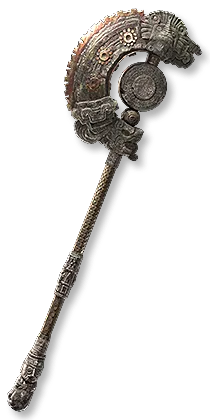 Jagged Greataxe
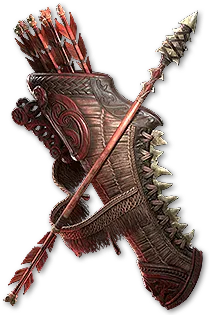 Serrated Quiver
 Staunching Charm
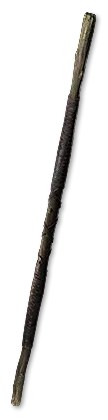 Runeforged Wrapped Quarterstaff
 Bleed I
 Bloodlust
 Deep Cuts I
 Rupture
 Poison III
 Herald of Blood
 Rusted Spikes
 Concoct I
 Malady
 Haemocrystals
 Rip
Rip Tear
Tear First Blood
 Hobble
 Incision
 See Red
 Admixture
 Rake
Rake Legacy of Edyrn's Tusks